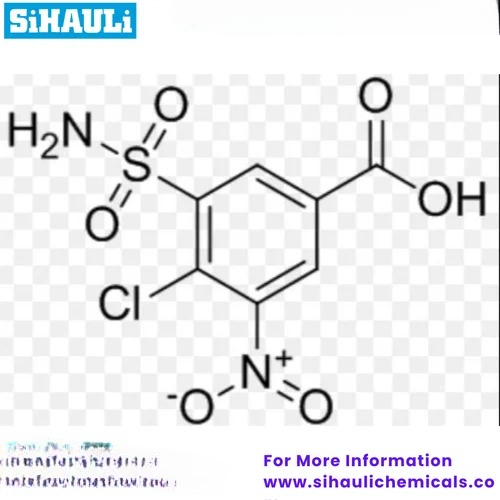
4-Chloro-3-nitro-5-sulphamoyl- benzoic acid About
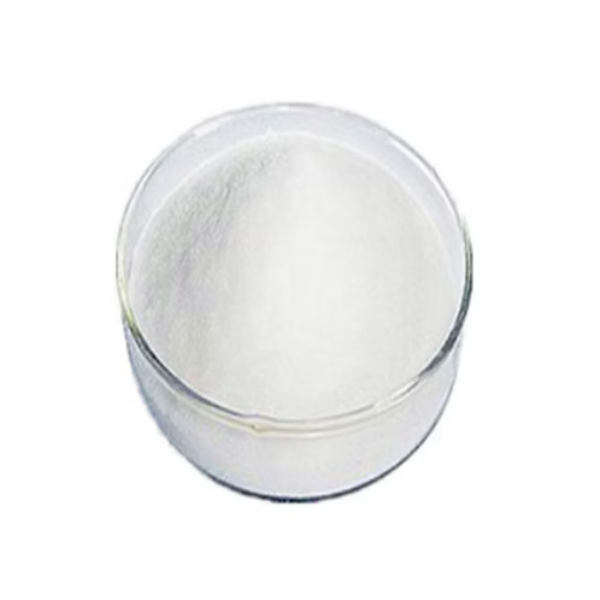
4-Chloro-3-nitro-5-sulfamoylbenzoic Acid product with CAS: 22892-96-2 is related to Bumetanide. It is also known with other names such as 3-(Aminosulfonyl)-4-chloro-5-nitro-benzoic Acid; 4-Chloro-3-nitro-5-sulfamoyl-benzoic Acid.Key Properties and StabilityThis compound features high purity, minimal impurities, and reliable stability under normal conditions, with a shelf life of up to two years. Its dense, crystalline form makes it easy to handle and store in a cool, dry environment. Notably, it is considered non-hazardous for various modes of transport, making it suitable for global distribution.
Applications and Benefits4-Chloro-3-nitro-5-sulphamoyl-benzoic acid serves as an essential intermediate in the synthesis of pharmaceuticals and dyes. Its robust chemical profile and industrial versatility make it highly valuable for manufacturers seeking high-quality, consistent raw materials for downstream synthesis and formulation.
FAQ's of 4-Chloro-3-nitro-5-sulphamoyl- benzoic acid:
Q: How should 4-Chloro-3-nitro-5-sulphamoyl-benzoic acid be stored for maximum stability?
A: Store the compound in a tightly closed container, placed in a cool, dry, and well-ventilated area. This preserves its stability and ensures a shelf life of up to two years under recommended conditions.
Q: What is the primary usage of this compound?
A: 4-Chloro-3-nitro-5-sulphamoyl-benzoic acid is primarily used as an intermediate in the synthesis of pharmaceuticals and dyes, serving as a crucial raw material in various chemical manufacturing processes.
Q: When does this compound decompose?
A: It decomposes at temperatures between 223-225C and does not exhibit a boiling point, so it should not be exposed to high heat during handling or processing.
Q: Where is this product commonly exported and supplied from?
A: This compound is manufactured, exported, and supplied by organizations in India, often reaching global pharmaceutical, chemical, and dye industries due to its stable transport classification.
Q: What are the safety considerations when handling this substance?
A: Though non-poisonous under normal conditions and non-hazardous for transport, it is labeled as an irritant (Xi). Standard PPE such as gloves and eye protection is recommended to avoid skin or eye contact.
Q: How is the product commonly packaged for shipment?
A: It is shipped in plastic or fiber drums lined with inner polyethylene bags to preserve quality, provide moisture protection, and ensure secure handling during transit.





 Send Inquiry

