Acetone (Dimethyl ketone) About
| Grade Standard |
Industrial Grade |
| Purity |
99% |
| Packaging Details |
25 litres Drum |
| Usage/Application |
Industrial Equipment Cleaning |
| Molecular weight |
88.11 |
| Cas.No |
513-86-0 |
| Chemical Formula |
C4H8O2 |
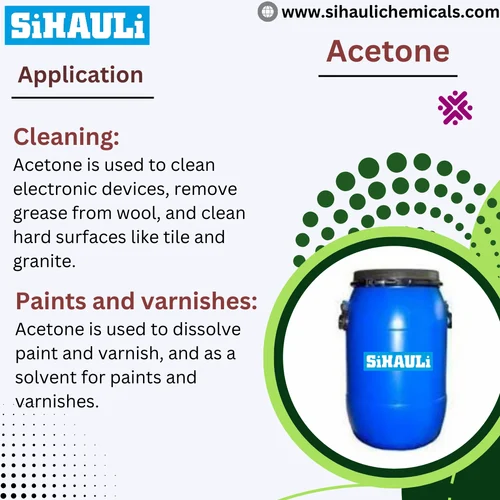
Acetone is a colorless, flammable liquid with a fruity odor and sweet taste. It's also known as dimethyl ketone, 2-propanone, and beta-ketopropane.
Wide Solvent VersatilityAcetone demonstrates exceptional solvency, dissolving a variety of substances such as oils, resins, and polymers. Its miscibility with water and common organic solvents like alcohol, ether, and benzene makes it ideal for formulating paints, coatings, adhesives, and for cleaning laboratory equipment effectively.
Safety and Handling GuidanceAs a flammable liquid (Class 3), acetone requires careful handling. Always store it in sealed containers in cool, well-ventilated areas away from any ignition sources. Adhering to recommended procedures ensures both user safety and product stability throughout its 24-month shelf life.
Multiple Industry ApplicationsIndustrially, acetone is indispensable in manufacturing, laboratory research, cleaning, and as a paint thinner. Its high purity and rapid evaporation rate facilitate efficient removal of residues, faster drying times, and improved formulation processes in various sectors, from pharmaceuticals to adhesives.
FAQ's of Acetone (Dimethyl ketone):
Q: How should acetone be safely stored and handled?
A: Acetone should be kept in tightly sealed containers in a cool, well-ventilated area, away from heat, sparks, and open flames. Due to its flammability (Flash Point: -20C, Hazard Class 3), it is essential to prevent any sources of ignition nearby and to follow proper industrial storage protocols.
Q: What are the main industrial applications of acetone?
A: Acetone is primarily used as a solvent in paints, coatings, adhesives, pharmaceuticals, and laboratory chemicals. It also serves as an effective cleaning agent and paint thinner due to its ability to dissolve various substances rapidly and completely.
Q: When is acetone typically used during the manufacturing process?
A: Acetone is commonly utilized during the formulation, cleaning, and thinning stages of manufacturing. Its rapid evaporation and strong dissolution power make it valuable for preparing surfaces, cleaning residue, and achieving desired viscosities in products.
Q: Where is acetone produced and supplied from in India?
A: Acetone is manufactured, supplied, imported, and exported by various accredited companies in India. It is readily available through industrial chemical distributors and suppliers offering packaging in bottles, cans, drums, or bulk according to customer requirements.
Q: What ecological precautions should be taken with acetone?
A: While acetone is stable under normal conditions, it should not be released into the environment, as it may cause adverse ecological effects. It is important to prevent spills and manage waste responsibly following local environmental regulations.
Q: How does the use of acetone benefit industrial cleaning and production?
A: Acetone's high purity (99.5% min), rapid evaporation, and powerful solvency make it efficient for removing residues and achieving cleaner surfaces in production environments. Its compatibility with various substances enhances productivity and maintains high-quality results.





 Send Inquiry

