Adipic Acid (Hexanedioic Acid) About
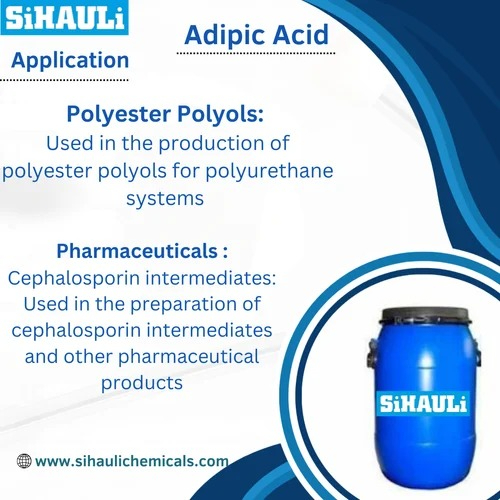
Adipic acid or hexanedioic acid is the organic compound with the formula (CH2)4(COOH)2. From an industrial perspective, it is the most important dicarboxylic acid: about 2.5 billion kilograms of this white crystalline powder are produced annually.Versatile Industrial ApplicationsAdipic Acid is primarily utilized as a precursor in nylon (polyamide) production, but its versatile chemical properties make it valuable for manufacturing polyurethanes, plasticizers, adhesives, and as an approved food additive. This broad spectrum of use contributes significantly to various industries including textiles, plastics, automotive, and food processing, where rigorous quality and performance standards are paramount.
Safe Handling and Storage GuidelinesProper care is essential when handling Adipic Acid, as it is an irritant to eyes and skin. Store the product in tightly closed HDPE bags, in a cool, dry, well-ventilated space and away from incompatible substances. Although non-poisonous and non-flammable under normal conditions, attentiveness to hygiene and safety protocols ensures long-term product integrity and personal safety.
FAQ's of Adipic Acid (Hexanedioic Acid):
Q: How is Adipic Acid commonly used in industry?
A: Adipic Acid is mainly employed as an intermediate in the manufacture of nylon (polyamide), polyurethanes, plasticizers, adhesives, and as a food additive. Its chemical stability and purity make it valuable across multiple industrial processes.
Q: What safety precautions are needed when handling Adipic Acid?
A: Adipic Acid should be handled with care, using protective eyewear and gloves to prevent irritation to the eyes and skin. Always keep the container tightly closed, store it in a cool, dry, well-ventilated area, and avoid contact with incompatible substances.
Q: What is the recommended storage method for Adipic Acid?
A: It is recommended to store Adipic Acid in 25 kg HDPE bags or suitable containers, tightly sealed and kept in a cool, dry, well-ventilated area away from direct sunlight and incompatible materials for optimal safety and shelf life.
Q: When does shipping Adipic Acid require special considerations?
A: Adipic Acid is classified as non-hazardous and is shipped as a solid. Standard shipping procedures for industrial chemicals apply, and no special hazardous materials handling is necessary, making it convenient for exporters and importers.
Q: Where does Adipic Acid find benefits beyond nylon production?
A: Beyond nylon, Adipic Acid provides essential benefits in producing polyurethanes, plasticizers for softening plastics, industrial adhesives, and as a food additive to control acidity and enhance product stability.
Q: What is the shelf life of Adipic Acid and how does it maintain its quality?
A: The shelf life of Adipic Acid is two years if kept stored in recommended conditions: a tightly closed container, in a dry, well-ventilated area away from direct sunlight or moisture, preserving both purity and effectiveness.





 Send Inquiry

