Chloroform (Trichloromethane,Methyl Trichloride)) About
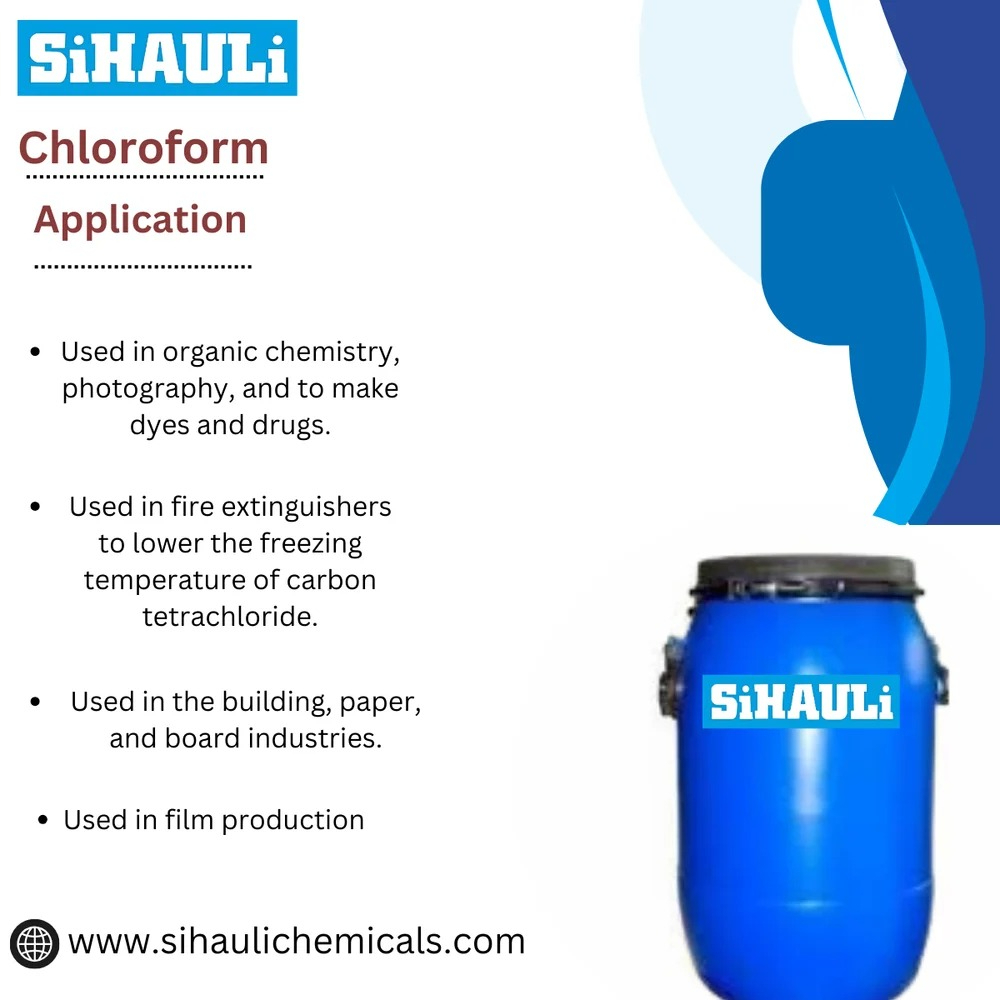
Chloroform (CHCl3cap C cap H cap C l sub 33) is a clear, colorless, volatile, non-flammable liquid with a sweet odor. It's a naturally occurring chemical, but most of the chloroform in the environment is man-made. Versatile Applications in Industry and ResearchChloroform is valued for its ability to dissolve a wide range of organic compounds, making it a preferred solvent in analytical, pharmaceutical, and chemical manufacturing processes. Its historical use as an anesthetic has shifted due to safety concerns, but today it remains integral in laboratory settings, particularly for extraction and synthesis applications.
Safe Handling and Storage PracticesDue to its toxic and potentially carcinogenic nature, chloroform must be managed with caution. Proper storage involves keeping it in tightly sealed HDPE drums or glass bottles, away from heat, light, and incompatible materials. Use in well-ventilated areas is recommended, along with personal protective equipment to minimize exposure risks.
Environmental and Health ConsiderationsChloroform is harmful to aquatic life and may cause long-term environmental effects. For personal safety, avoid inhalation, ingestion, or skin contact, and follow immediate first aid measures if exposure occurs. Its shelf life is approximately two years when stored correctly, ensuring both efficacy and safety during use.
FAQ's of Chloroform (Trichloromethane,Methyl Trichloride)):
Q: How should chloroform be stored to maintain its stability and shelf life?
A: Chloroform should be stored in tightly closed containers, such as sealed HDPE drums or glass bottles, in a cool, dry, well-ventilated area away from heat and direct light. This prevents decomposition and maintains a shelf life of up to two years.
Q: What are the main uses and benefits of chloroform in industrial and laboratory settings?
A: Chloroform serves as a solvent in organic synthesis, a laboratory reagent, and an intermediate in chemical manufacturing. Its ability to dissolve various organic compounds makes it invaluable for extraction processes and analytical work, especially in pharmaceuticals and research.
Q: When should first aid be administered for accidental exposure to chloroform?
A: First aid should be applied immediately after exposure. For inhalation, move the affected individual to fresh air and seek medical attention. In case of skin or eye contact, rinse thoroughly with water and consult medical professionals if symptoms persist.
Q: Where is chloroform commonly used or sourced?
A: Chloroform is used worldwide, often supplied by exporters, importers, manufacturers, and suppliers based in countries like India. Common applications span the pharmaceutical, chemical, and industrial sectors, as well as research laboratories.
Q: What precautions are needed when working with chloroform?
A: Use chloroform only in well-ventilated areas and wear proper protective equipment such as gloves and goggles. Avoid inhaling vapors, and avoid contact with skin and eyes. Always keep containers tightly closed and away from incompatible substances like strong bases and reactive metals.
Q: How is chloroform typically used as a solvent in organic processes?
A: Chloroform is selected for its miscibility with most organic solvents and its efficiency in dissolving a broad spectrum of organic molecules. It plays a crucial role in the extraction of alkaloids, organic synthesis, and preparation of certain pharmaceuticals.






 Send Inquiry

