Ethyl Carbitol (2-(2-Ethoxyethoxy)ethanol) (Ethyldiglycol) About
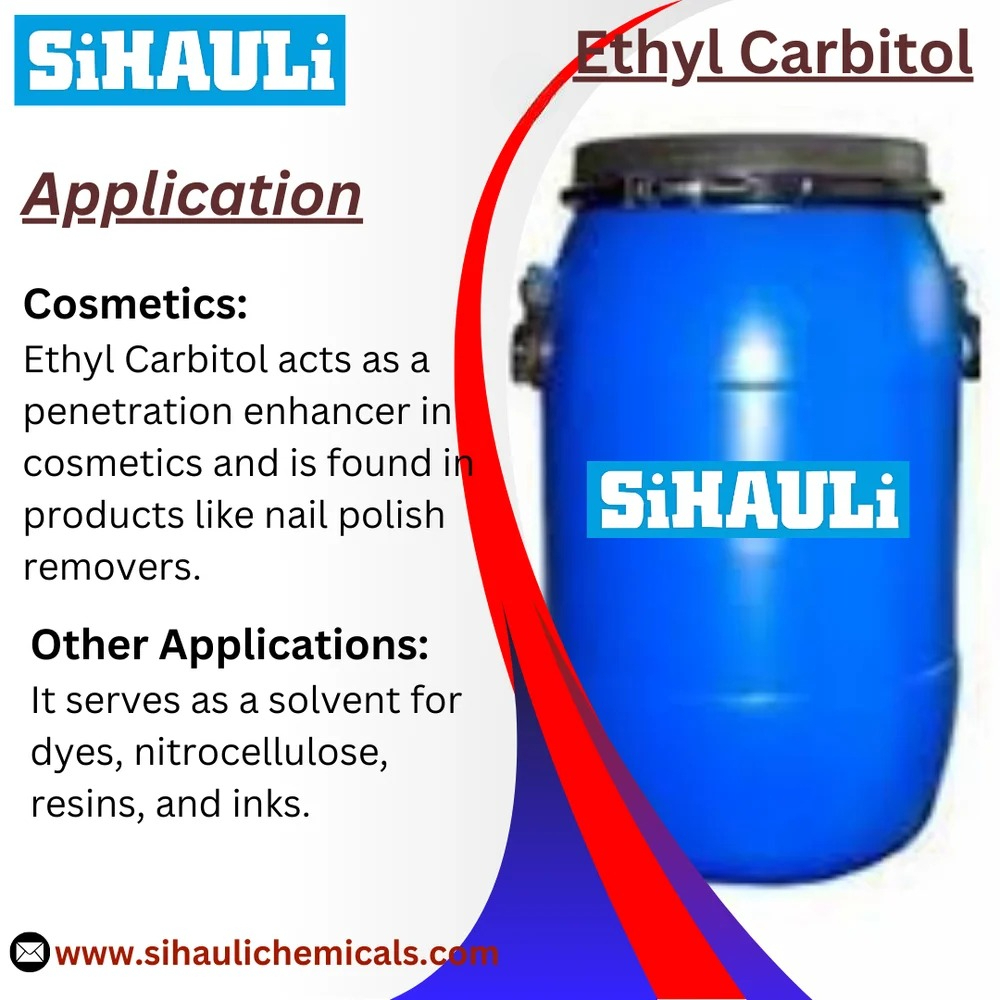
Ethyl carbitol, also known as diethylene glycol monoethyl ether or ethyl digol, is a colorless, clear liquid with a mild odor that is soluble in water and miscible in most organic solventsVersatile Solvent for Industrial ApplicationsEthyl Carbitol stands out for its exceptional solvency power and compatibility with various substances, making it a go-to solvent in sectors such as paints, coatings, textiles, dyes, and industrial cleaners. Its neutral pH, low toxicity, and miscibility with both water and organic solvents enhance its appeal for manufacturers seeking quality and efficiency in their formulations.
Key Physical and Chemical PropertiesThis glycol ether has a boiling point of 202C, a flash point of 96C, and an autoignition temperature of 226C, indicating significant thermal stability. Its low vapor pressure (0.07 mmHg at 20C), moderate viscosity (6.6 mPas), and surface tension (29.8 mN/m) contribute to excellent wetting and spreading properties. With a freezing point and melting point of -70C, it remains stable and liquid under diverse storage and process conditions.
Safe Handling and Storage GuidelinesTo maximize shelf life and maintain product quality, Ethyl Carbitol should be stored in a cool, dry, well-ventilated area, away from sources of ignition. Its stable nature under standard conditions simplifies storage requirements. Available in large drums and IBCs, it is well-suited for industrial scale use as an exporter, importer, manufacturer, or supplier in India.
FAQ's of Ethyl Carbitol (2-(2-Ethoxyethoxy)ethanol) (Ethyldiglycol):
Q: How is Ethyl Carbitol (Ethyldiglycol) typically used in industry?
A: Ethyl Carbitol is primarily used as a solvent in various industries, including paints, dyes, inks, cleaners, and textiles, due to its high solvency and compatibility with many organic and inorganic materials.
Q: What benefits does Ethyl Carbitol provide in formulations?
A: Its ability to dissolve a wide range of substances, combined with low toxicity, neutral pH, and excellent miscibility, makes Ethyl Carbitol a preferred choice for improving product performance and process efficiency in industrial applications.
Q: When should Ethyl Carbitol be replaced during storage?
A: Under recommended storage conditions-cool, dry, and well-ventilated-Ethyl Carbitol maintains its properties for up to 2 years. Replace the product if it exceeds this period or shows signs of contamination.
Q: Where should Ethyl Carbitol be stored to preserve its quality?
A: It should be stored in tightly sealed containers in a cool, dry, and well-ventilated area away from sources of ignition to ensure stability and prevent degradation.
Q: What is the safety profile and handling process for Ethyl Carbitol?
A: Ethyl Carbitol is considered non-poisonous and stable under normal storage conditions. Users should still employ standard chemical handling practices, such as using protective gloves and eyewear, and ensure adequate ventilation.
Q: How can Ethyl Carbitol improve cleaning or wetting processes?
A: Thanks to its moderate viscosity, low surface tension, and water miscibility, Ethyl Carbitol enhances cleaning formulations by improving surface wetting and penetration, optimizing removal of soils and residues.





 Send Inquiry

