About Hydroquinone, p-Hydroxylphenol, Hydrochinone
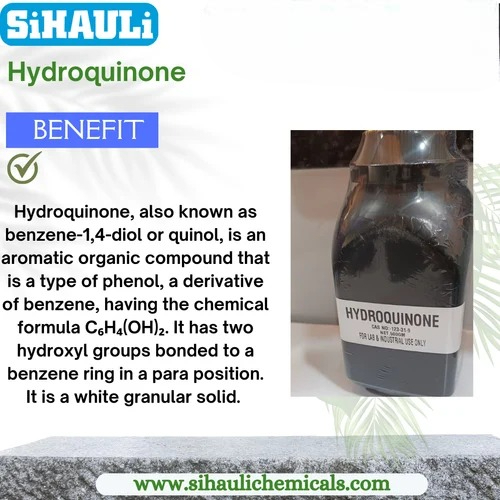
Hydroquinone, also known as benzene-1,4-diol or quinol, is an aromatic organic compound that is a type of phenol, a derivative of benzene, having the chemical formula CH(OH). It has two hydroxyl groups bonded to a benzene ring in a para position. It is a white granular solid. Powerful Reducing Agent for Multiple IndustriesHydroquinone stands out as a reliable, powerful reducing agent with widespread applications in photography, cosmetics, and polymer processing. Its strong electron-donating properties make it ideal for inhibiting polymerization and developing photographic films, ensuring consistency and quality in industrial processes.
Excellent Antioxidant and Depigmenting FeaturesFavored in cosmetic formulations, Hydroquinone is renowned for its depigmenting properties, commonly used to lighten dark patches of skin. Its ability to neutralize free radicals further extends its utility in preserving products and preventing oxidative degradation.
Safe Handling and StorageAs a hazardous substance (UN 3077, Transport Hazard Class 9), Hydroquinone requires strict safety measures. Protective gear, such as gloves and eye protection, is recommended. Store the compound in a tightly sealed, cool, dry, and dark place to maximize its 24-month shelf life and minimize risk of decomposition or exposure.
FAQ's of Hydroquinone, p-Hydroxylphenol, Hydrochinone:
Q: How should Hydroquinone be safely stored and handled?
A: Hydroquinone must be kept in a tightly sealed container, stored in a cool, dark, and dry location to prevent light or air exposure which can degrade its quality. Always use appropriate personal protective equipment, such as gloves and safety goggles, to minimize the risk of skin or eye contact. Avoid inhalation of dust and accidental ingestion, as Hydroquinone is poisonous.
Q: What are the primary industrial applications of Hydroquinone?
A: Hydroquinone is widely used as a photographic developer, polymerization inhibitor, and antioxidant. It is also utilized as a skin depigmenting agent in cosmetic formulations, and it finds roles as a laboratory reagent and in the manufacturing of polymers and resins.
Q: When is Hydroquinone most beneficial in cosmetic formulations?
A: It is most beneficial in cosmetics as a skin lightening or depigmenting agent to reduce hyperpigmentation, melasma, and dark spots. However, its use must comply with safety guidelines to prevent adverse effects, as it is potent and can cause irritation with improper use.
Q: Where can Hydroquinone be sourced for industrial use?
A: Hydroquinone is available through reputable exporters, importers, manufacturers, and suppliers, particularly in India, for industrial-grade needs. Ensure legal and safety standards are met during procurement and transportation, as it is classified as a hazardous substance (UN 3077, class 9).
Q: What precautions are necessary when using Hydroquinone in laboratory or industrial settings?
A: Wear appropriate PPE, including gloves and eye protection. Avoid direct contact with skin and eyes, and do not inhale dust. Follow safety instructions such as P264 (wash hands thoroughly after handling), P273 (avoid release to the environment), and P280 (wear protective clothing). In case of contact, rinse immediately and seek medical advice.
Q: How does Hydroquinone benefit photographic and polymer industries?
A: In photography, Hydroquinone acts as a developing agent that helps reduce silver halides to metallic silver, improving image quality. For polymers, it functions as an inhibitor to prevent premature polymerization, ensuring optimal product stability and processing control.





 Send Inquiry

