Malonic Acid (Propanedioic Acid) About
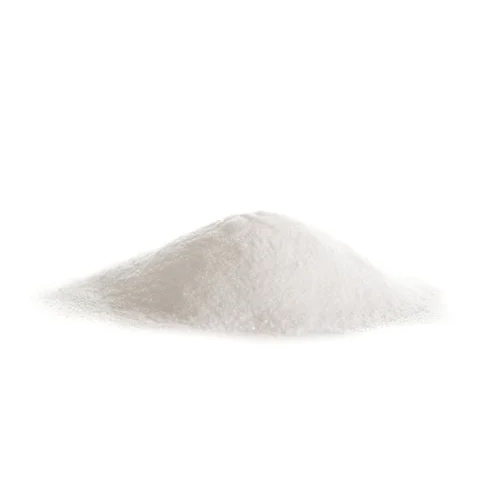
Malonic acid is also known as Propanedioic acid or Dicarboxymethane. The name is derived from the Greek word Malon which means apple. Malonate is the ionized form of malonic acid, along with its esters and salt.Characteristics and Physical PropertiesMalonic Acid appears as a white, crystalline powder and remains stable when stored in cool, dry, and ventilated spaces in tightly closed containers. It features a melting point of 135C and a density of 1.62 g/cm3, with less than 0.5% moisture content and negligible heavy metals (<10 ppm). The acid is odorless, soluble in water, alcohol, and ether, and presents a pH of 2.83 in a 0.01M solution.
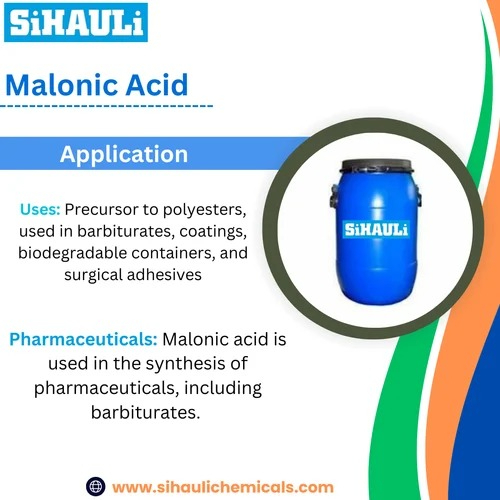
Versatile Applications and UsesWidely used as a chemical reagent and intermediate, Malonic Acid plays a crucial role in the pharmaceutical industry, food preservation, and synthesis of barbiturates. Its high purity and reliable performance make it suitable for industrial and laboratory-grade applications. The flexibility in packaging-standard 25 kg bags or custom options-adds to its usability for manufacturers, exporters, and suppliers.
FAQ's of Malonic Acid (Propanedioic Acid):
Q: How should Malonic Acid be stored to maintain its stability and quality?
A: Malonic Acid should be stored in a cool, dry, and well-ventilated area. The container must be kept tightly closed to prevent moisture absorption, ensuring the product's stability and maintaining a shelf life of up to 36 months from the date of manufacture.
Q: What are the main applications of Malonic Acid in industry?
A: Malonic Acid is used predominantly as a chemical reagent and intermediate in organic synthesis. Its key applications include pharmaceutical manufacturing, food preservation, and the synthesis of barbiturates, offering substantial value to both industrial and laboratory processes.
Q: Is Malonic Acid safe to handle, and what precautions should be taken?
A: While Malonic Acid is classified as non-toxic and non-poisonous, it may cause irritation to the eyes, skin, and respiratory system. Users should handle it with care, using appropriate personal protective equipment such as gloves and safety goggles to avoid direct contact.
Q: How is Malonic Acid transported, and are there any regulations?
A: Malonic Acid is not regulated for transport, making shipping straightforward. It should be securely packaged, typically in 25 kg bags or custom containers, to prevent exposure to moisture and ensure product integrity during transit.
Q: What is the solubility profile of Malonic Acid, and why is it important?
A: Malonic Acid is readily soluble in water, alcohol, and ether, contributing to its versatility in various chemical processes. This property supports its effectiveness as an intermediate in organic synthesis and its practical use in laboratory settings.
Q: What sets Malonic Acid apart as a chemical reagent or intermediate?
A: Malonic Acid's high purity (99%), stable crystalline form, and broad solubility make it an exceptional reagent in organic synthesis. Its reliable performance enhances yields and quality in end-use applications across multiple industries.






 Send Inquiry

