Monoglyme (Alpha,Beta-Dimethoxyethane, Dimethyl Glycol) About
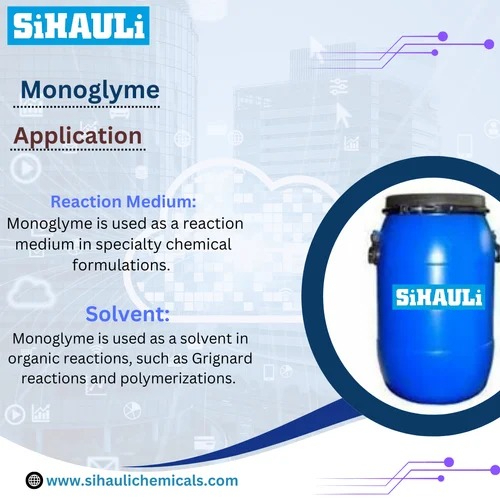
Monoglyme is used as the low-viscosity component of the solvent for electrolytes of lithium batteries. In the laboratory, it is used as a coordinating solvent. Monoglyme is often used as a higher boiling alternative to diethyl ether and THF. It forms chelate complexes with cations and acts as a bidentate ligand.Comprehensive Solvent for Chemical SynthesisMonoglyme is widely recognized for its superior solvency, making it an essential reagent in organic synthesis, polymerizations, and as an electrolyte component in batteries. Its neutral pH, high purity, and compatibility with a vast range of substances ensure reliable and reproducible results across industrial and laboratory environments.
Safe Handling and Storage RecommendationsDue to its flammable nature and toxicity, Monoglyme must be handled with care. Store it in tightly sealed containers, away from heat sources and open flames, in a cool and ventilated area. Always use recommended protective equipment to minimize the risk of exposure to vapors or accidental contact.
FAQ's of Monoglyme (Alpha,Beta-Dimethoxyethane, Dimethyl Glycol):
Q: How should Monoglyme be safely stored and handled?
A: Monoglyme should be kept in tightly sealed containers stored in a cool, ventilated place, away from any sources of ignition, such as heat or open flames. It is essential to use protective equipment, such as gloves and eye protection, to avoid inhalation or direct contact due to its flammability and toxicity.
Q: What are the main applications of Monoglyme?
A: Monoglyme is primarily used as a solvent in chemical reactions, for battery electrolyte formulations, and in polymerizations. Its compatibility with water, alcohol, ether, acetone, and benzene makes it highly versatile in both laboratory and industrial chemical processes.
Q: When does Monoglyme pose safety hazards during use?
A: Monoglyme is considered hazardous if exposed to heat, sparks, or open flames due to its low flash point (-1C) and high flammability. Inhalation or ingestion is also dangerous, as the compound is toxic and may irritate the respiratory system. Always follow recommended precautions during handling and use.
Q: Where is Monoglyme most beneficial in industrial or laboratory settings?
A: Monoglyme is particularly valuable in industries involved in electronics, battery production, advanced organic synthesis, and polymer manufacturing, as well as laboratory research requiring a stable, effective, water-miscible solvent.
Q: What is the shelf life of Monoglyme and how can its quality be maintained?
A: When stored under recommended conditions, Monoglyme has a shelf life of 24 months. Ensuring containers are tightly sealed and kept away from light, heat, and moisture will help preserve product integrity and prevent hazardous decomposition or contamination.
Q: How does Monoglyme compare to other solvents in terms of performance and safety?
A: Monoglyme offers excellent solvency and low viscosity, making it a preferred choice for various chemical applications. However, its high flammability and toxicity require stricter safety measures compared to less hazardous solvents. Users should evaluate their specific needs and implement appropriate safety protocols.





 Send Inquiry

