Phenol (Carbolic Acid) About
| Form |
Crystals |
| Usage/Application |
Plastic/Nylon/Epoxy manufacturing |
| Grade |
Reagent Grade |
| Purity |
99% |
| Brand |
Cepastat, Ulcerease, and Chloraseptic. |
| Physical Form |
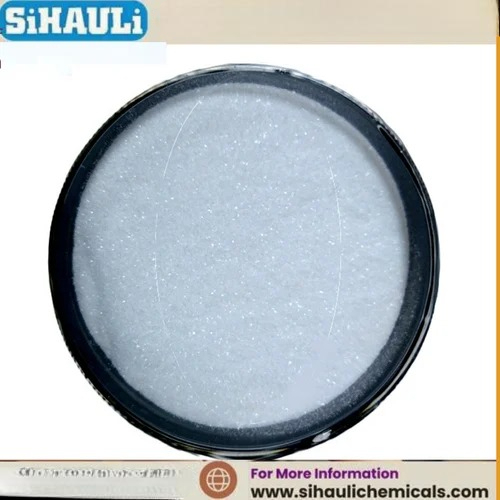
White Crystalline Solid |
| Chemical Formula |
C6H5OH |
| CAS Number |
108-95-2 |
| Molecular Weight |
94.11 g/mol |
| Boiling Point |
181.7 DegreeC |
Phenol, also known as carbolic acid, is an aromatic organic compound. Pure phenol is a white crystalline solid that is volatile. It is mildly acidic and requires careful handling due to its propensity to cause chemical burns. Although similar to alcohols, phenols have unique distinguishing properties.
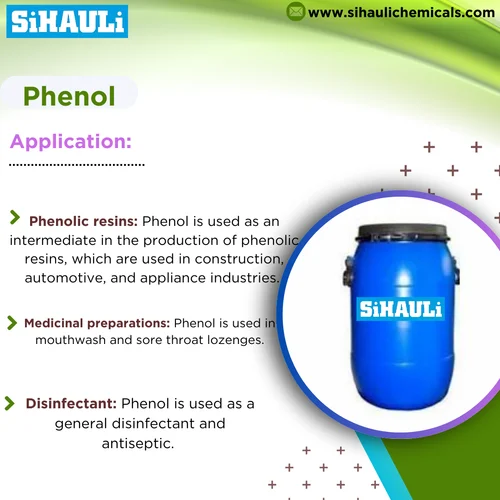
Versatile Industrial ApplicationsPhenol is valued for its broad range of applications, spanning laboratory research, pharmaceutical synthesis, disinfectant formulations, textile processing, and resin manufacturing. Its effectiveness as a precursor and disinfectant makes it essential in multiple industries. With 99% purity and reliable supply in India, it is ideal for industrial and commercial usage wherever stringent quality standards are required.
Safe Handling and Storage GuidelinesGiven its classification as a toxic substance (Hazard Class 6.1), phenol should be stored in a cool, dry, well-ventilated place, away from sources of ignition. Proper storage extends its shelf life up to two years. Utilize suitable packaging such as drums, carboys, or bottles, and practice safe handling by using personal protective equipment and following established safety protocols to prevent hazardous exposure.
FAQ's of Phenol (Carbolic Acid):
Q: How should phenol (carbolic acid) be stored for optimal stability and safety?
A: Phenol should be stored in a cool, dry, well-ventilated area away from heat and ignition sources. It must be kept in tightly sealed containers such as drums, carboys, or bottles, as improper storage can reduce shelf life and pose safety hazards. Under recommended conditions, phenol remains stable for up to two years.
Q: What are the key industrial uses and benefits of phenol?
A: Phenol is highly valued in laboratories as a reagent, in the pharmaceutical industry for drug synthesis, as a disinfectant, and in textiles and resin manufacturing. Its high purity (99%) increases product efficacy, enhances chemical reactions, and ensures consistency, benefiting a variety of industries relying on stringent quality.
Q: When is phenol applied as a disinfectant, and why is it effective?
A: Phenol is widely used as a disinfectant in both industrial and commercial environments. Its chemical properties, including its ability to break down cell membranes and denature proteins, make it highly effective at controlling microbial growth on surfaces, ensuring hygienic and safe workspaces.
Q: Where is phenol sourced and how is it supplied in India?
A: In India, phenol is manufactured, supplied, exported, and imported by specialized chemical companies. It is commonly packaged in 25 kg and 50 kg drums, carboys, or bottles to meet the demands of industrial and commercial customers, ensuring safe and secure transport.
Q: What is the process for handling and using phenol safely in an industrial setting?
A: To handle phenol safely, wear appropriate personal protective equipment such as gloves, goggles, and lab coats. Work in well-ventilated areas, avoid inhaling fumes, and prevent skin contact. In case of spills, use absorbent materials and dispose of waste according to hazardous materials guidelines.
Q: How is phenol's solubility relevant to its applications?
A: Phenol is only slightly soluble in water but dissolves readily in alcohol and ether. This property is particularly useful in chemical synthesis and laboratory applications, enabling easy formulation with various solvents and compatibility with diverse industrial processes.





 Send Inquiry

