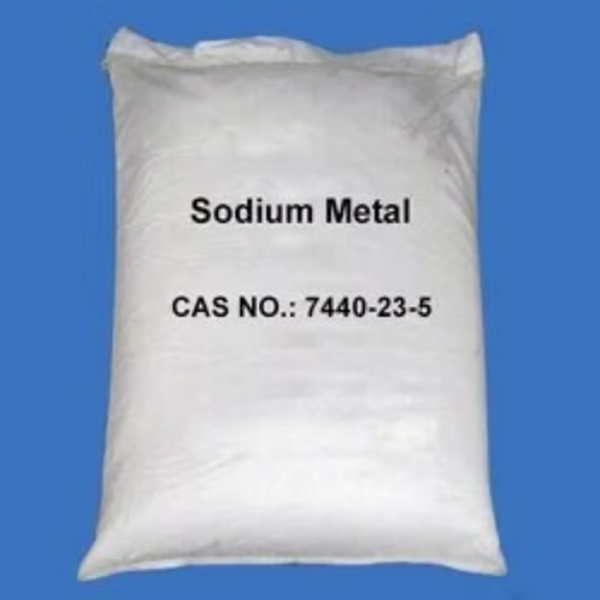
Sodium Metal About
Sihauli Chemical is established in 1998 with the purpose of serving the emergent pharmaceutical sector in India and international market. Sihauli has come a long way from being just a chemicals supplier to a big renowned API, Pharmaceutical Intermediate, Nutraceuticals , Herbal Extracts, Industrial Chemicals, and Solvents for manufacturing , supplying, sourcing and marketing company.
Chemical formula Na
Molar mass 119.120 gmol1
Density 0.85 g/cm3
Boiling point 882.8 C
Technical Analysis
Specification Typical Values
Colour (APHA) silvery-white
CAS NO. 22,9898
Density 0,97 at 20C
Solubility 36.0 g/100 g of water at 25 C
sodium (Na), chemical element of the alkali metal group (Group 1 [Ia]) of the periodic table.
Properties and AppearanceSodium metal appears as a soft, silvery-white solid and is odorless. Its melting point is 97.72C, and its boiling point is 883C. The material is lightweight with a density of 0.97 g/cm3 and is available in various shapes including lumps, sticks, and spheres. It conforms to industrial and technical standards with a purity of at least 99.7%.
Packaging and Safe HandlingTo prevent accidental ignition or hazardous reactions, sodium metal is packaged in tightly sealed containers filled with mineral oil or an inert atmosphere. This minimizes exposure to moisture and air, both of which trigger violent reactions. Strict safety protocols must be followed during handling, storage, and transportation.
Critical ApplicationsSodium metal is essential in numerous industrial processes. It is widely utilized in chemical synthesis, metallurgical operations, organic reduction reactions, and as a coolant in nuclear reactors. In laboratory settings, sodium serves as a reliable reduction agent and a reagent for specialized syntheses, offering significant benefits in efficiency and reaction specificity.
FAQ's of Sodium Metal:
Q: How should sodium metal be stored to ensure safety?
A: Sodium metal must be stored under mineral oil or in an inert atmosphere, in tightly sealed containers. It should be kept away from moisture, air, and oxidizing agents to maintain stability and prevent hazardous reactions.
Q: What precautions are necessary when handling sodium metal?
A: Proper personal protective equipment (PPE), such as gloves and goggles, is essential because sodium is toxic, corrosive, and highly reactive. Handling should be performed in a well-ventilated area, and direct contact with water must be strictly avoided due to the risk of explosive reactions.
Q: Where is sodium metal commonly used in industry?
A: Sodium metal is frequently utilized in the chemical industry for synthesis and reduction reactions, in metallurgy for refining processes, as a coolant in nuclear reactors, and as a laboratory reagent for organic reductions.
Q: What is the process for disposing of sodium metal safely?
A: Sodium metal waste must be neutralized by controlled reaction with an alcohol under professional supervision, never with water. The disposal process should align with local hazardous material guidelines to prevent environmental and safety risks.
Q: What benefits does sodium metal offer as a reagent in chemical processes?
A: Sodium metal serves as a powerful reducing agent, enabling efficient chemical syntheses that are difficult with less reactive substances. Its use enhances yield and selectivity in certain organic and inorganic reactions.
Q: When does sodium metal become hazardous during its lifecycle?
A: Sodium becomes especially hazardous upon exposure to moisture, air, acids, or oxidizing agents, which can trigger violent reactions. Safe practices in storage, handling, and disposal are crucial at all times.





 Send Inquiry

