Styrene Acrylic Copolymer Emulsion About
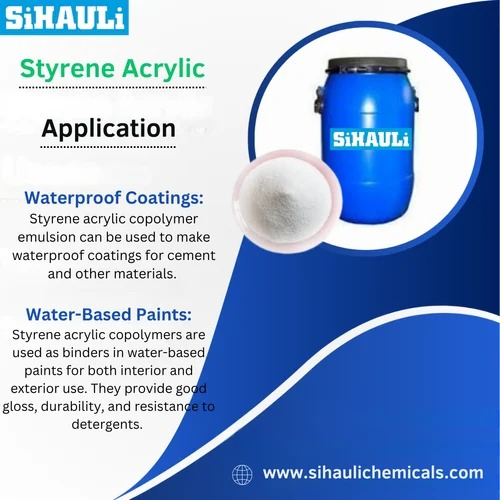
Styrene acrylate copolymers are used as binder for interior and exterior paints due to their outstanding pigment binding properties. Styrene acrylate copolymers offer ideal gloss, film strength, durability and resistance to removal by detergents. Coatings based on styrene acrylate emulsions display excellent U.V stability and resistance to water, and alkalis. It is important to note that increasing the styrene content in styrene/acrylic copolymers may impair the water absorption and elasticity of the film. These coatings require very low maintenance as they have low tendency to pick up dirt and show good film flexibility and hardness. Styrene acrylate copolymers are considered as a significant component of floor finishes. Majorly used in architectural/decorative paints for interior and exterior wall coatings, gloss paints for kitchen and bath, faades etc. followed by the wood and furniture industry.Emulsion Polymers Selection for Paints and Coatings Emulsion Polymers are tremendously versatile! They have vast chemistries and provide low cost, low emissions, zero VOC, good shelf-life, freeze-thaw stability, and potential sustainability in many coating formulations. Due to these benefits, the emulsion polymers are increasingly used in paints and coatings to serve growing needs in diverse sectors and applications. Get a comprehensive review about the fundamentals of emulsion polymers and learn everything you need to know in this detailed guide.Versatile Industrial ApplicationsOur styrene acrylic copolymer emulsion serves as a reliable binder and film-forming agent in adhesives, paints, construction materials, textiles, paper, and waterproofing formulations. Its robust chemical profile ensures compatibility and outstanding performance across a variety of industrial and commercial settings.
Superior Film Formation and DurabilityWith a minimum film-forming temperature of 0-20C and particle size averaging between 0.1-0.3 m, the emulsion creates smooth, flexible films that resist water and alkali attack. These properties make it well-suited for environments demanding durable, high-quality coatings and adhesives.
Safe Handling and StorageThis emulsion is non-poisonous, odorless, and stable within a pH of 6-10, making it safe for manufacturing environments. Ensure storage in cool, dry, and ventilated areas, and avoid freezing to maintain product integrity. Properly stored, it remains stable for 6-12 months in unopened containers.
FAQ's of Styrene Acrylic Copolymer Emulsion:
Q: How should Styrene Acrylic Copolymer Emulsion be stored for optimal shelf life?
A: Store the emulsion in a cool, dry, and ventilated area, away from direct sunlight and freezing temperatures. When kept in unopened HDPE drums or IBC tanks, it maintains stability for 6-12 months.
Q: What are the main benefits of using this emulsion in adhesives and coatings?
A: It provides excellent film flexibility, strong water and alkali resistance, and reliable binding, ensuring that end-products exhibit superior performance and longevity in demanding industrial environments.
Q: Where can Styrene Acrylic Copolymer Emulsion be effectively applied?
A: This emulsion is well-suited for adhesives, paints, coatings, construction materials, textiles, paper treatments, and waterproofing applications due to its chemical stability and durable film properties.
Q: What is the application process for this polymer emulsion?
A: It is typically dispersed directly in water and blended into formulations according to specific industrial requirements. The emulsion forms an even film upon drying, which maintains flexibility and resistance to water and alkalis.
Q: Is the emulsion safe to use?
A: Yes, this product is non-poisonous, has a mild characteristic smell, and is odorless and tasteless. While safe for industrial use, it is not intended for ingestion and standard safety precautions should be followed.
Q: What is the recommended pH range for maintaining emulsion stability during use?
A: To ensure product stability and optimal performance, keep the emulsion within a pH range of 6 to 10 during formulation and processing.





 Send Inquiry

