Cinnamaldehyde, cinnamic aldehyde, cinnamal About
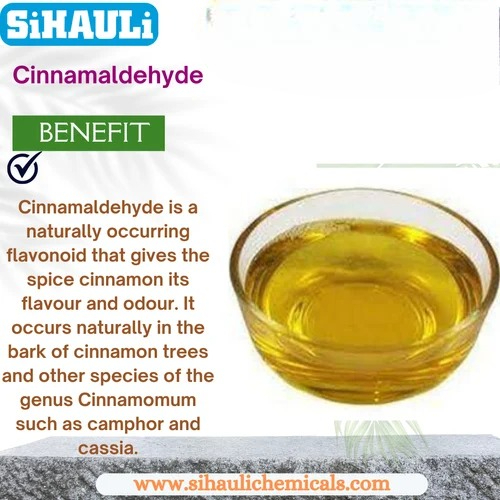
Cinnamaldehyde is a naturally occurring flavonoid that gives the spice cinnamon its flavour and odour. It occurs naturally in the bark of cinnamon trees and other species of the genus Cinnamomum such as camphor and cassia.Versatile Applications Across IndustriesCinnamaldehyde stands out for its multifaceted use in the flavor, fragrance, and pharmaceutical sectors. It acts as a main ingredient in cinnamon-flavored foods, imparts a spicy-sweet aroma in perfumes, and serves as a crucial intermediate in the synthesis of various pharmaceuticals. Additionally, it possesses antimicrobial properties, extending its value to product preservation and health applications.
Robust Stability and Safety ProfileThis aromatic compound is stable under normal conditions and offers a shelf life of up to two years when stored properly. While non-poisonous at standard concentrations, it is important to handle cinnamaldehyde with care, as it can irritate the eyes, respiratory tract, and skin. Proper storage in tightly closed containers in cool, dry, ventilated areas maintains its quality and minimizes risk.
FAQ's of Cinnamaldehyde, cinnamic aldehyde, cinnamal:
Q: How is cinnamaldehyde typically used in industry and consumer products?
A: Cinnamaldehyde finds use as a flavoring agent in foods, a fragrance in perfumes, an antimicrobial in formulations, and as an intermediate in organic and pharmaceutical synthesis. Its sweet, spicy aroma makes it desirable in consumer goods, while its chemical properties support industrial applications.
Q: What steps are involved in storing cinnamaldehyde to maintain its stability?
A: Cinnamaldehyde should be stored in tightly closed containers, away from direct sunlight in a cool, dry, and well-ventilated area. Adhering to these storage guidelines helps preserve its chemical integrity and extends its two-year shelf life.
Q: When should precautions be taken while handling cinnamaldehyde?
A: Precautions are necessary during all stages of handling, as cinnamaldehyde can irritate the eyes, skin, and respiratory system. Use appropriate personal protective equipment and good ventilation to reduce exposure and risk.
Q: Where is cinnamaldehyde soluble, and what does this mean for its applications?
A: Cinnamaldehyde is soluble in solvents like alcohol, ether, and chloroform, but only slightly in water. This solubility profile enables its broad use in formulations for flavors, fragrances, and other products that require blending with organic solvents.
Q: What benefits does cinnamaldehyde offer in pharmaceutical and food-grade applications?
A: Cinnamaldehyde's antimicrobial properties help preserve products and reduce spoilage in food and pharmaceutical preparations. Its appealing flavor and aroma also enhance the sensory experience in edible and topical goods.
Q: How is cinnamaldehyde packaged for distribution and export?
A: It is typically supplied in drums or bottles, and packaging can be customized according to customer requirements to ensure safe and secure transport, especially for export purposes.





 Send Inquiry

