Monoethanolamine (MEA) About
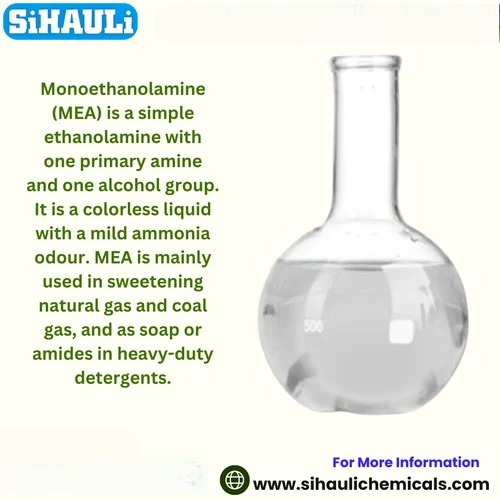
Monoethanolamine (MEA) is a simple ethanolamine with one primary amine and one alcohol group. It is a colorless liquid with a mild ammonia odour. MEA is mainly used in sweetening natural gas and coal gas, and as soap or amides in heavy-duty detergents.Versatile Industrial ChemicalMonoethanolamine is prized for its adaptability in a wide array of industries. Whether used in gas sweetening processes, detergent manufacturing, or as a component in surfactants and emulsifiers, MEA provides reliable reactivity and compatibility (except with copper, zinc, and their alloys). Its clear liquid form facilitates easy mixing and handling in industrial processes.
Proper Handling and StorageMEA should always be packaged in approved containers, such as 200 kg HDPE drums or ISO tanks, clearly labeled with its hazard classification (UN 2491; Class 8). To retain product efficacy over its two-year shelf life, store MEA in cool, dry, well-ventilated areas, away from incompatible substances. Always use safety precautions due to its irritant and corrosive nature.
FAQ's of Monoethanolamine (MEA):
Q: How should Monoethanolamine (MEA) be stored to maximize shelf life?
A: MEA must be kept in tightly closed containers, such as HDPE drums or ISO tanks, in a cool, dry, and well-ventilated area. Proper storage ensures a shelf life of up to two years and prevents contamination or decomposition, especially when kept away from incompatible materials like copper, zinc, and their alloys.
Q: What is the main industrial usage of Monoethanolamine?
A: Monoethanolamine is primarily used in gas treatment applications (such as removing acid gases), as well as in making detergents, emulsifiers, surfactants, and chemical syntheses. Its high miscibility makes it a versatile choice in numerous industrial and commercial processes.
Q: When is MEA considered hazardous, and what precautions should be taken?
A: MEA is classified as a corrosive substance (Hazard Class 8, UN 2491) and should always be handled with appropriate protective gear, including gloves and eye protection. Adequate ventilation, emergency washing facilities, and careful handling are recommended to minimize exposure and avoid chemical burns or irritation.
Q: Where can MEA be applied during chemical processing or manufacturing?
A: MEA finds applications in gas treatment plants, industrial detergent and surfactant production lines, chemical synthesis plants, and as an emulsifying agent across various manufacturing operations. Its compatibility with water, alcohol, and ether enhances its usefulness in these sectors.
Q: What are the benefits of using Monoethanolamine in gas treatment?
A: MEA efficiently absorbs and removes acid gases, such as carbon dioxide and hydrogen sulfide, from process streams. This capability is crucial for refining and purification in the petrochemical and natural gas industries, offering enhanced environmental compliance and process reliability.
Q: How does the corrosive nature of MEA affect equipment selection?
A: MEA is corrosive to copper, zinc, and their alloys. Therefore, processing and storage equipment should be made from compatible materials such as certain plastics or stainless steel, rather than copper or zinc-containing metals, to prevent damage and maintain product purity.





 Send Inquiry

